change

The Birds and the Trees

The day before the trees came down, I hauled a pile of wooden ladders out of the undergrowth and tried not to think about poison ivy.

I try not to think about a lot of my yard, my home, my self. There’s just too much mess, and try as I might, I can’t seem to keep it all swept up. Even when I do manage to hack back the junk trees and vacuum the living room and floss between my teeth, the weeds and dog hair and plaque always come back before my willpower does.

To some extent, that’s just the experience of being a human in this world. I really am giving it my best. I use a cute little app to remind me to mow the lawn, scoop the cat poop, take my meds. I meet regularly with a therapist who takes my insurance. I dragged the ladders away from the weeds so the tree removers could do their job.

A pair of robins eyed me warily as I shuffled back and forth on that task, wiping cobwebs and desiccated spider corpses off my hands and onto my shorts. One had a dark head and a bright red-orange chest, the other’s colors were grayer, muted. A male and a female. Parents overseeing a nest somewhere nearby?

My own parents have been the ones doing the heavy lifting (literally) at my house lately. The plan is to replace the ancient, leaning garage with a new one at the end of a new concrete driveway (no more mowing the gravel!). While I was comfortably air-conditioned at work, Mom and Dad were gutting the garage, gathering estimates, and even scrubbing the pans that I’d left “soaking” in the sink for lengths of time I won’t admit to here.

My parents have the relentless energy and capability of cartoon superheroes. Dad can master any machine and fix any maintenance mire. Mom can reverse a tornado of mess in minutes and paint a house in an afternoon (to reference The Producers: “Two coats!”).

And me? I can begrudgingly drag a stack of ladders a couple of feet across the yard.

When I finished, I tried to find the nest that the birds were potentially guarding, but the overgrown edges of my yard were too dense to parse. The robins chattered at me from the power lines (that’s them in this essay’s header image) as I strolled the length of my lawn, splitting my attention between the tangled knots of the junk tree canopy and the reaching trios of poison ivy leaves that threatened my bare ankles.

Nothing. If there was a nest, I couldn’t find it. I didn’t know whether to feel relieved or concerned. The entire jungle of my backyard was scheduled to be culled first thing in the morning, and if one of the dozens of vine-choked trees secretly housed a huddle of hatchlings, I wanted to mark it off to keep them safe.

So many critter homes were about to be demolished to improve my own home. Just one more thing to feel guilty about.

In the morning, before I could dare snooze my alarm, a fleet of trucks arrived, lining the narrow neighborhood street and releasing a swarm of men in matching helmets and patriotically-themed UV-resistant uniforms.

Arriving alongside them was my mother in a rainbow of gem tones and a twirl of skirt.

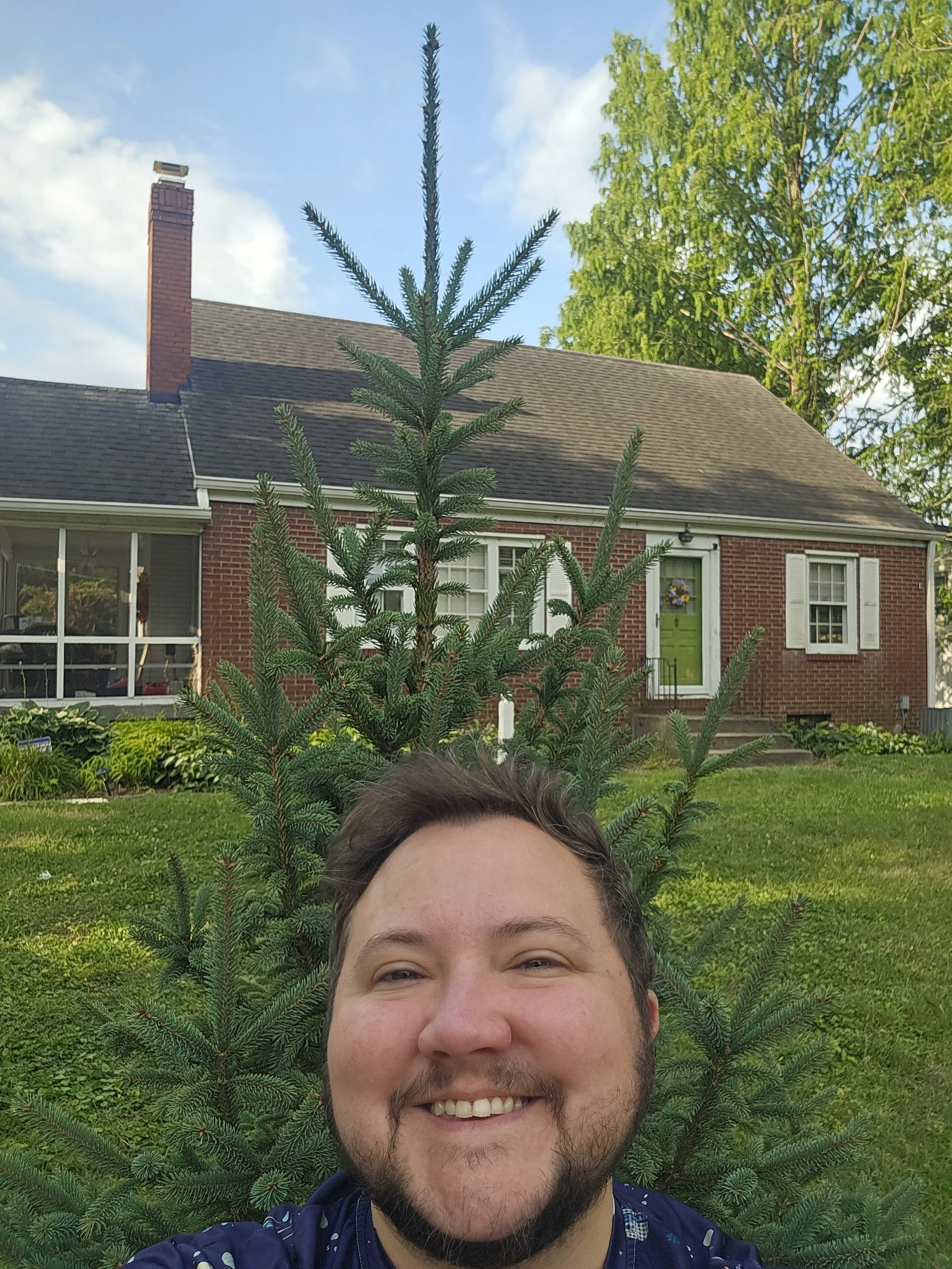
“Not this one!” she joked to the men, pointing with both arms to the spruce I planted eight years ago as they laid out chainsaws and harnesses on the lawn. “That’s Spruce Springsteen!”
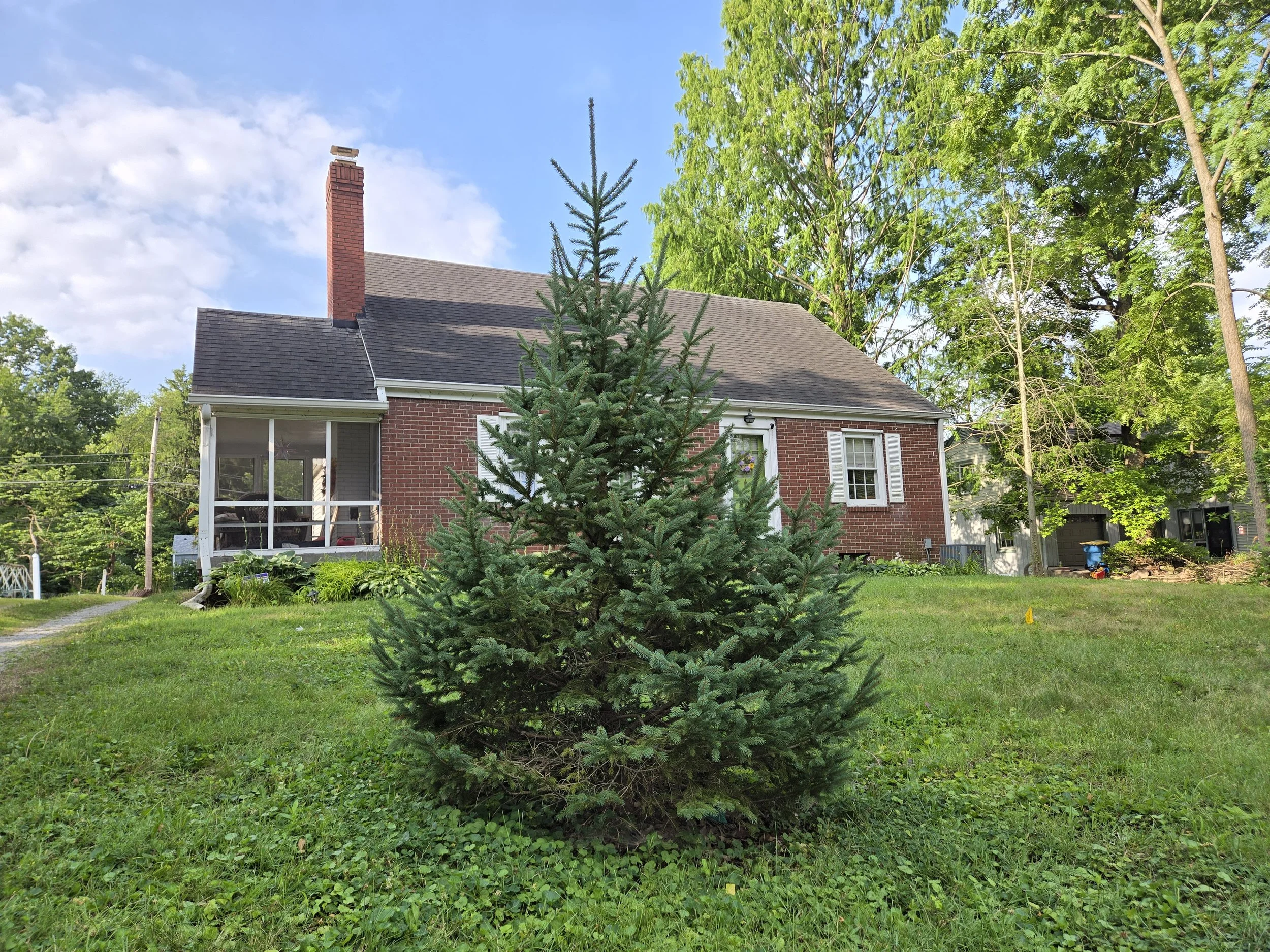
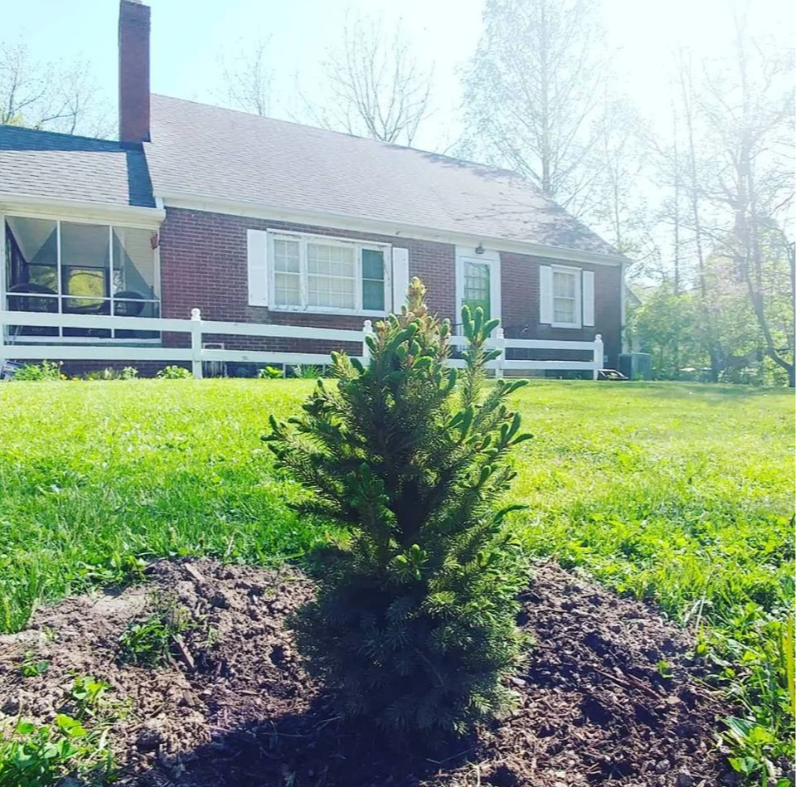
[Pictured above: Spruce now vs. Spruce when I planted him (and blogged about it) in 2018. Also, all 5’2 of me for scale.]

The men were not in a joking mood. As I scrambled to find places to park cars out of the way, the workers slung weighted lines over the high branches of the nearest doomed walnut. They moved with the swift conviction of a platoon of ants en route to a picnic.

Unfortunately, I had my own work to attend to, so I didn’t witness just how quickly my yard was stripped of its decade or more of overgrowth. My mom and an ever-vigilant neighbor friend reported that the job was completed by the early afternoon. By the time I returned from work, everyone and every tree was gone.

Every tree except for two narrow trunks that twisted around and climbed up each other into a shabby spray of leaves and dying vines. There, nestled in the crux of the bonded trees, sat a nest.

The nest had shreds of plastic dangling from it like sickly-white jellyfish tendrils. There was that guilt again, that the wild animals who share my home are suffering because of my presence, or the general presence of humanity. It’s been a little tough to feel warmly towards mankind lately, after all. But it was a solid nest regardless, and I stood still and quiet to watch as the boldly-painted father robin arrived to feed the brood. A cluster of excited triangles bobbled up to meet him, hungry beaks that had survived the surrounding apocalypse.

The tree-cutters had spared them.

Over the next few days, I occasionally checked on the family, despite being swooped at by the parents. I just wanted to make sure they were still there, still OK. At one point, I worried that one of the parents had become sick. I saw the outline of an adult-sized bird, but it was very still, and its red chest was flecked with black. A quick check online reassured me that this was a healthy juvenile, just about ready to leave the nest.
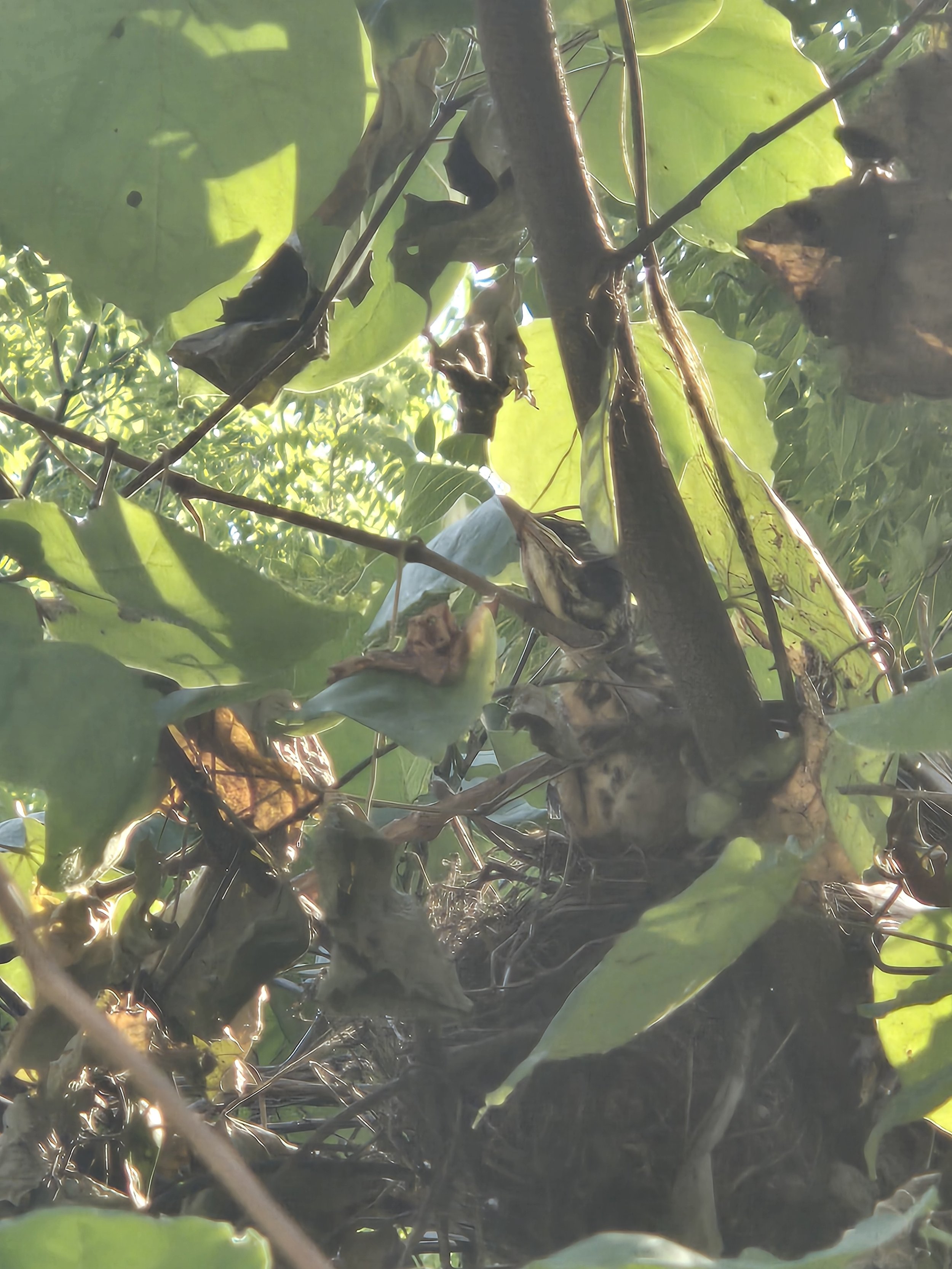
Check out this big blotchy baby.

Which must have happened on a day I didn’t check on them, because the next thing I knew, my dad had returned to cut down the last two trees. He confirmed to me that the nest was empty; the kids had made it, and they’d all moved on.

I was sort of sad to have missed their departure. So much has changed so rapidly. My house looks bald without its cowl of unkempt greenery, and my heart aches for the massive walnut tree that must have been living here since before my great grandparents built the house I now own. When I left for work, that tree towered over my backyard, but when I came home, it was like there was a hole in the sky where its branches were meant to grow.

It’s for the best. This will make my life easier. Happier. I even feel guilty about that. I know the guilt doesn’t help anything, but it adheres to my brain like candle wax on carpet, seeping into every crevice and fiber, hardening by the second. My parents may be superheroes, but I have a superpower too: finding ways to be ashamed about absolutely any- and everything.

For now, the best I can do is meet the guilt with gratitude. I am lucky to have my own pair of robin parents protecting me and my home, even if that home is held together with literal and metaphorical garbage sometimes. I have been spared the overwhelm of navigating all these changes alone. What does it matter if I feel unworthy? The love and support are given freely, generously. I would be rude to reject such a gift.

It will take some time to adjust, but my new view is of a wide and limitless sky, and somewhere in it, young robins are soaring.
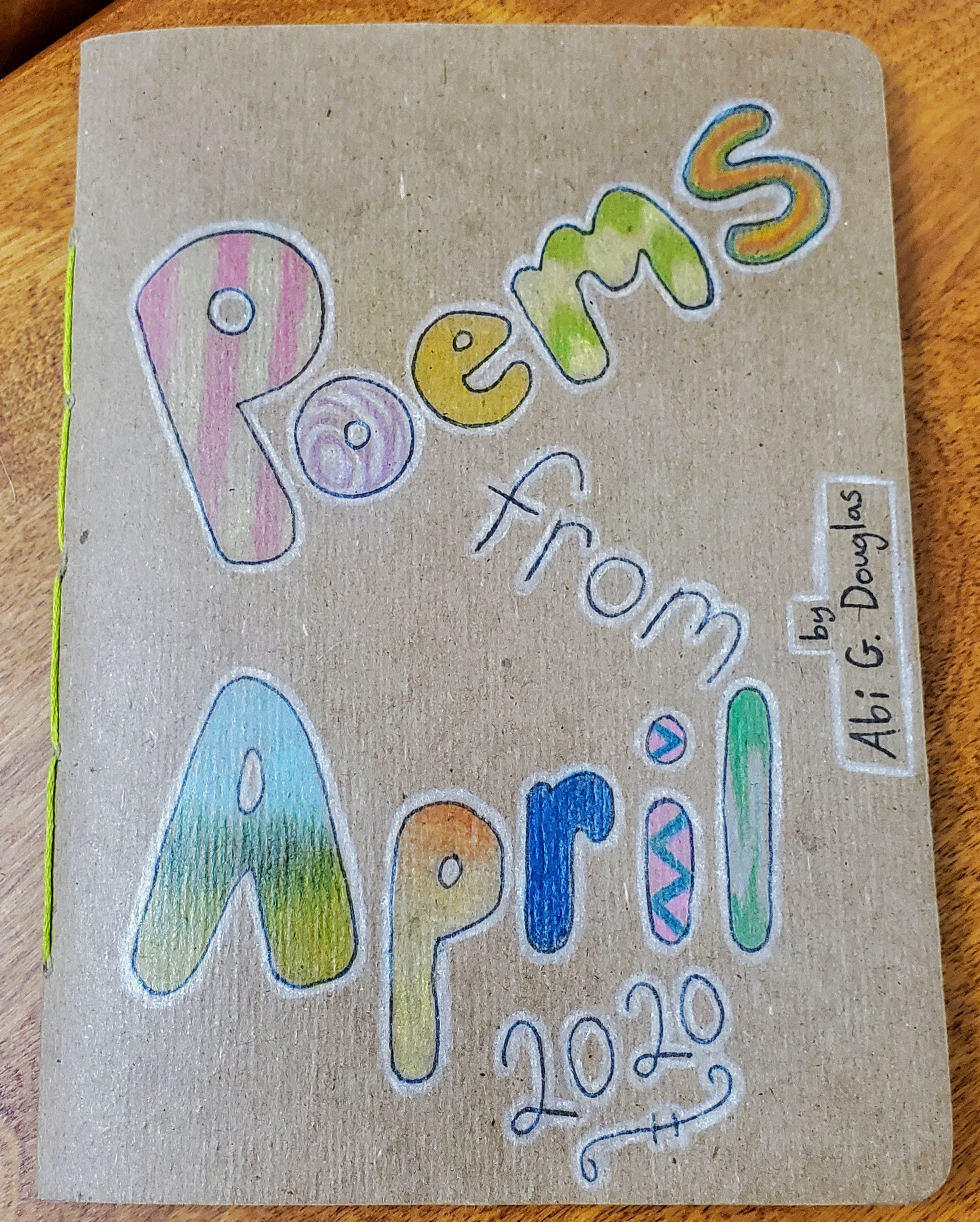
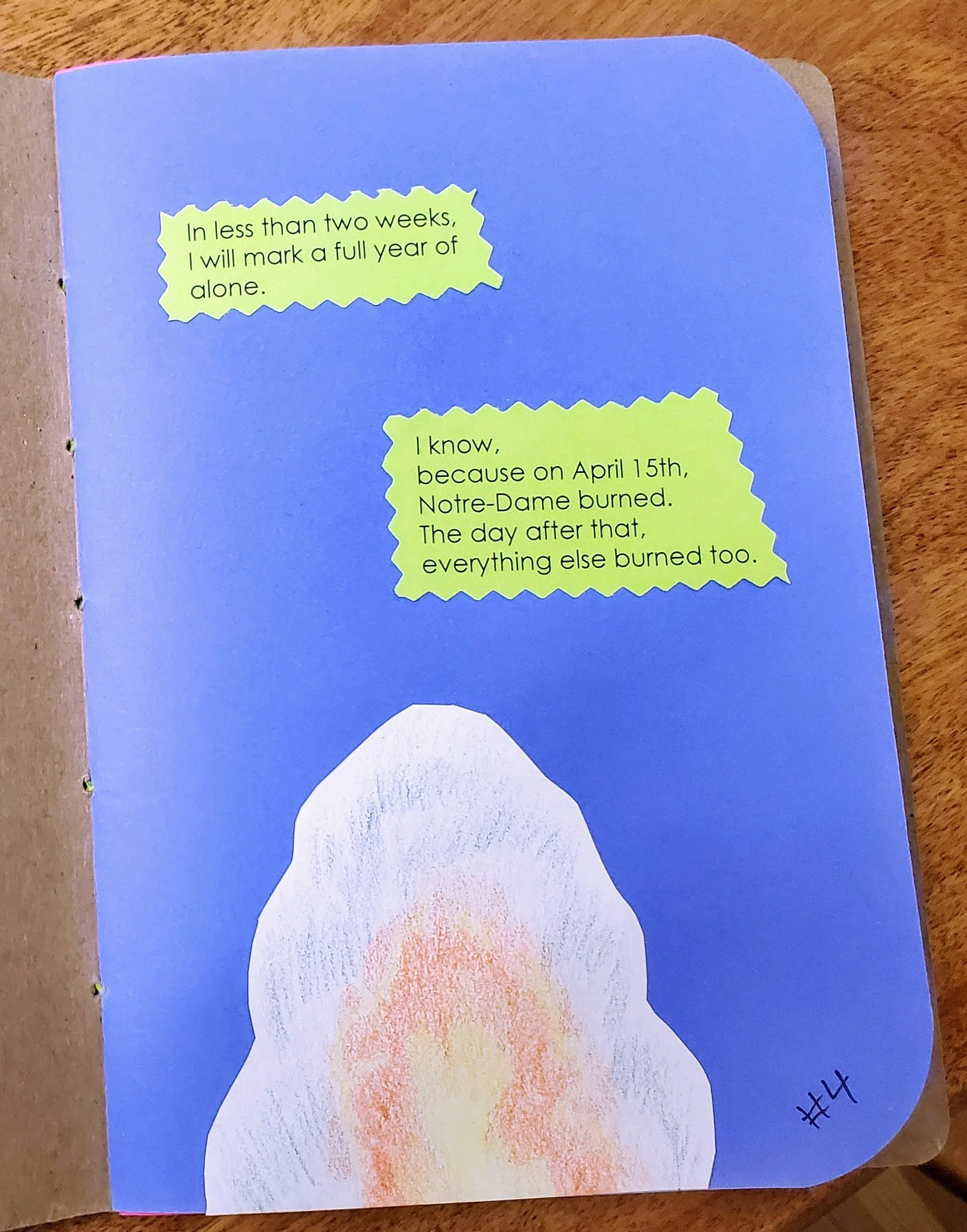
The World's Smallest Digital Sketchbook Library

I’m not sure what triggered my memory to check The Sketchbook Project’s site for the status of the book of poetry I submitted last year. I think it must have been when I was cleaning up my art desk (an uncharacteristic move, I know) and found the drawer where I’d stowed my first draft of the book, back when the project had been something else, a sort of memoir-esque comic that was too ambitious for me to complete by the deadline.

I was very aware of the deadline, which is why I rebound my sketchbook twice: first with sturdier sketch paper for the comic, then with neon-bright printer paper for my last minute plan change. I’d been given the sketchbook by some beloved friends, and as I am unable to complete any significant task without forcing myself into a procrastination-induced panic, I waited until months after I’d received the gift to put serious work into it.

It was a terrific gift: a little, customizable book I could fill with just about anything and then return to the Brooklyn Art Library, which houses the largest collection of sketchbooks in the world. I was delighted by it, and did a great deal of daydreaming about how to fill it (without making tangible progress, of course). I started getting my ideas on paper in the beginning of 2020, aware of the late summer deadline, but unaware of what 2020 had in store.

I tried my best. I scheduled out my pages, set alarms on my phone to remind myself to work on them, and came up with schemes to create large, artsy-fartsy filler sections. In the end, I just couldn’t do it in the way I’d originally intended. I did my second rebinding and decided to feature some of the poetry I’d written that spring instead so that I’d at least have something to submit.

I was still proud of it, for what it was. I’d worked hard to write a piece of poetry every day during the month of April (National Poetry Month!), and this way, I’d get to kinda-sorta publish some of that work. I took some photos, packaged my book up, and sent it on its way just in time.

Then I forgot about it, because if something isn’t in my direct line of sight, it has a 50% chance of being immediately flushed from my brain, an issue that has only been exacerbated by the pandemic. In this case, I knew it would take a while for the sketchbook to be digitally uploaded, and that I’d get a notification when it was, so I felt safe dismissing it from my mind.

A year passed, and the notification never came. Whatever triggered my memory of the book also compelled me to check on its status. Had it really been a year? Or was it only months ago? Time’s been goopier than usual, so it seemed reasonable to me that I’d submitted more recently than I thought, and that my book might still be in line to be uploaded.

When I logged into the site to check, however, I discovered that my book had never even arrived.

It was just gone.

I sat there stunned for a few seconds before I started to cry. Actually, “cry” may be too gentle of a word for what I was doing… I was bawling. My body suddenly felt so heavy that I just folded forward onto my desk and sobbed and keened and blubbered until my cat finally decided to come chew on my hair, snapping me out of it.

I knew I’d probably never physically hold that book again, but the concept that it was missing from the world in a way I’ll never be able to track sent such a thunderbolt of grief through my heart that I felt actual pain.

I have felt that pain several times in the past few years. Loss is Change’s ugly cousin, and it has visited all of us recently. While change comes with the promise of an exchange, a transformation of one thing into another, loss is just… loss. Something is gone. Nothing inherently takes its place, fills that gap. There aren’t answers or explanations, there is only absence.

I’ve been preoccupied with loss lately. I live in fear of it. I fear losing my job, losing my pets, losing my friends and family, losing my mind. In fact, earlier this year, I was so convinced that I was indeed losing my mind that a therapist proctored a series of tests for me, including an intelligence test. I’d been so scattered and sluggish and forgetful that I assumed my brain was physically deteriorating. I scored fine. I scored well, actually, though I know intelligence isn’t really that simple to measure, and that my various privileges inflated my score. But what if I used to have an even better score? What if my cognitive functions are slowly draining away? What if I finally lose it all?

Of course, the truth is that I will lose it all, one way or another. I am impermanent, which is a concept that’s even harder to comprehend than loss. All I have is right now, and that’s always draining away as well. I won’t get the minutes back. They, too, are lost.

Or are they?

I’ve spent a long time thinking of Change and Loss like those cousins - separate yet connected - when I really should be thinking of them as different states of the same phenomenon. It’s all just change, the universal constant that I struggle so eternally with, but sometimes I must take a more active role in the transformation.

For example, while I may never get back my ever-dwindling minutes, it’s not like they never existed. I exchange each moment for a memory. And when I lose those memories? Well, that’s a bit harder to consider. Just because I can’t remember them, however, doesn’t mean they never happened. Maybe the things I forget will be something someone else remembers. Maybe it’s not all about me in these exchanges.

Maybe it all cascades.

On my (hopefully distant) horizon, I see death, the ultimate transformation. I will lose all that I am that day. I can’t conceive of a greater loss than that… It’s impossible to think about the total absence of self. It’s all I’ve ever known (and damn if I haven’t learned A Lot about myself in the past couple years). The change that happens in my final second on Earth is a change I’ll never know.

But maybe other people will, and that’s what I mean by “it all cascades.” I think of a friend’s friend whom I wish I’d known better and his eagerness to say “Yes, Absolutely” to adventure, and how that shapes my own willingness to be bolder and wilder years later. I think of my grandmother when I pass yard sales or crave a late night bowl of ice cream to enjoy with a good book. I think of another friend every time it rains, and about a specific moment we shared, lying in an alley and letting the water soak us so that we could stand up and see our dry silhouettes for a few seconds before the storm faded them away.

I can only hope that, while I’m still here, I’m creating my own cascades. I am here right now. I have changed, I have lost, and yet I also have the power to transfigure at least some of those losses. I mean, even my name has changed since I put this book together. Maybe it’s good that it only exists here, where I can tell you directly that I’m Gordon now, and I was Gordon then, and Gordon made this book, even if the name on the cover says otherwise.

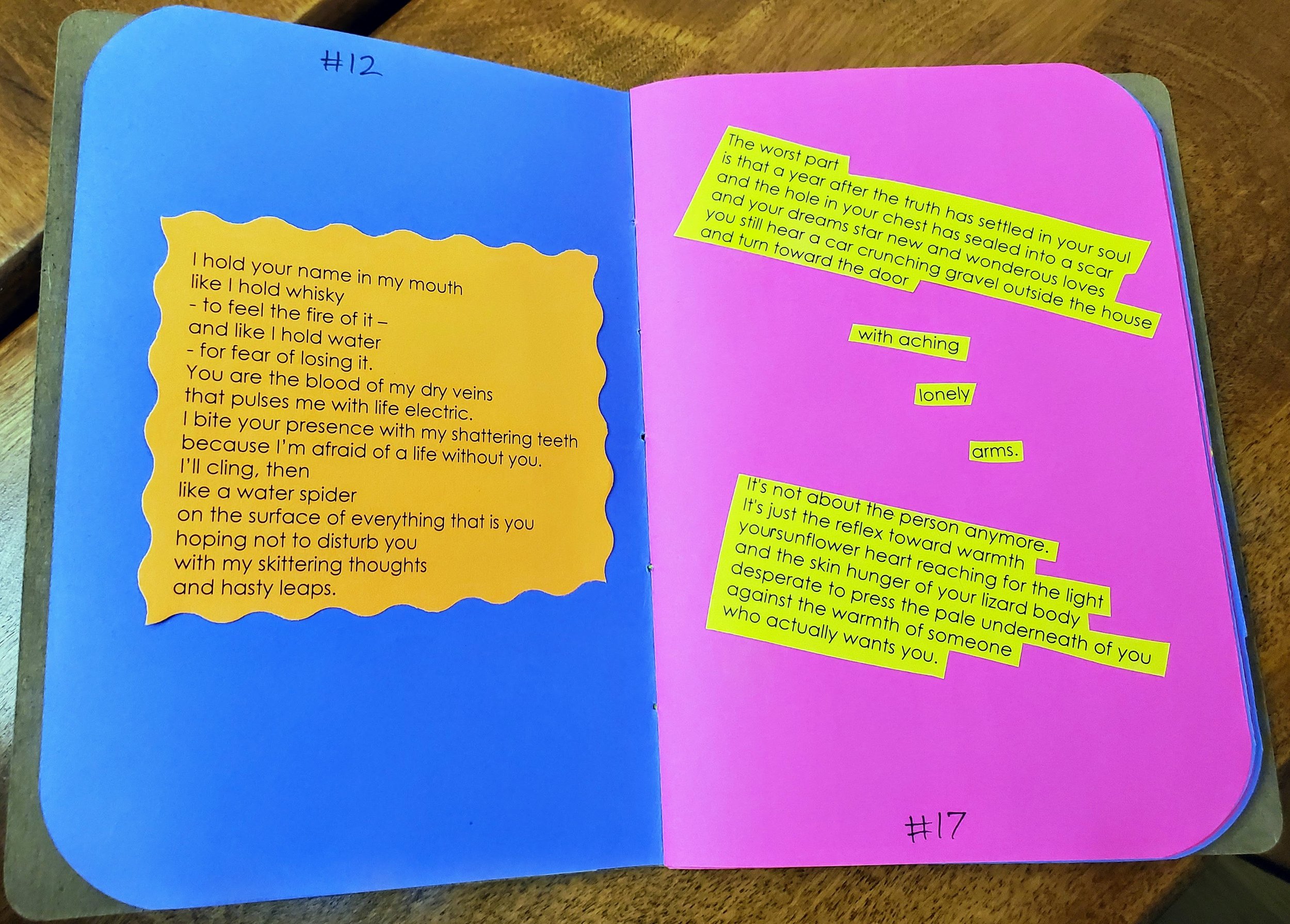
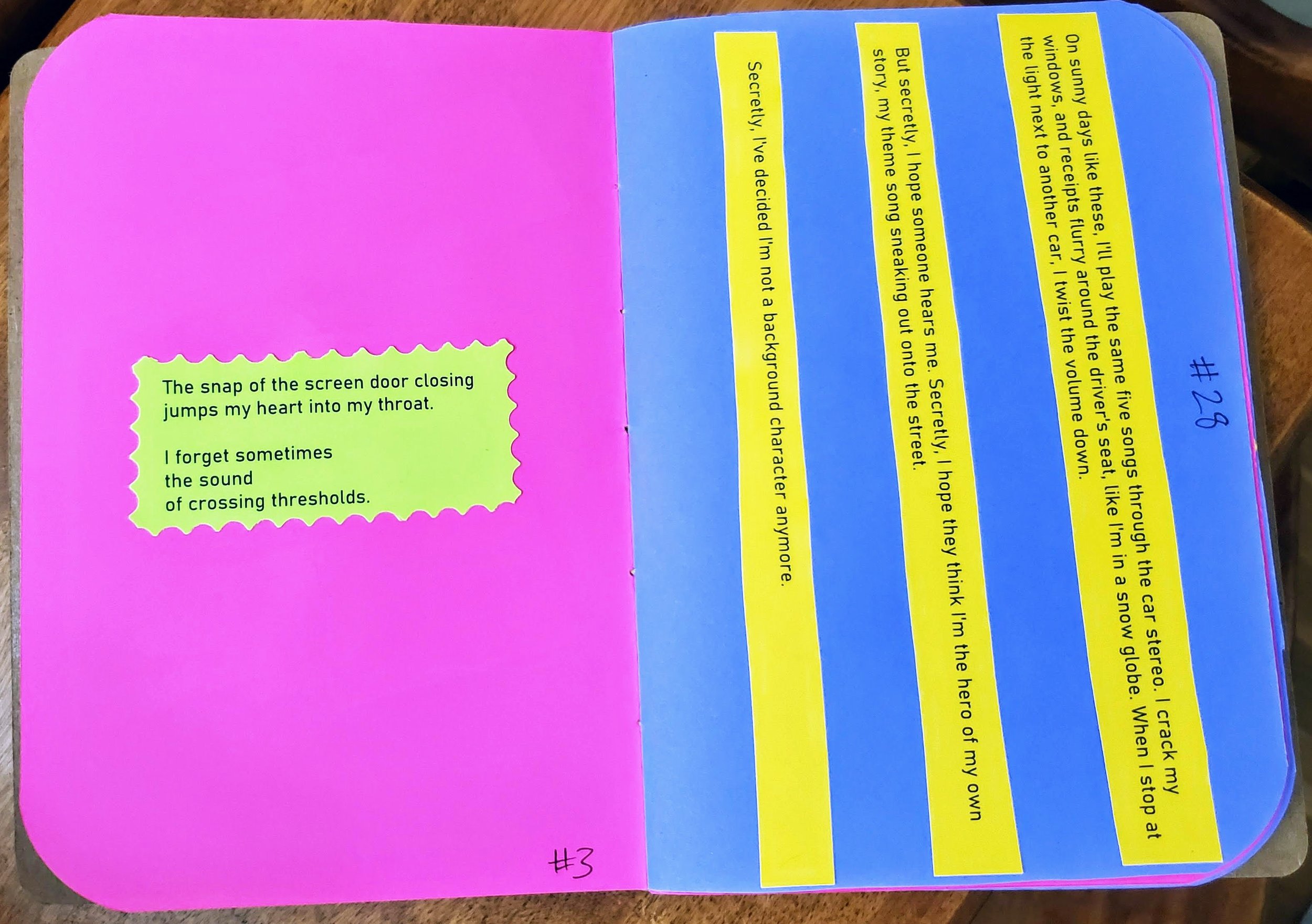
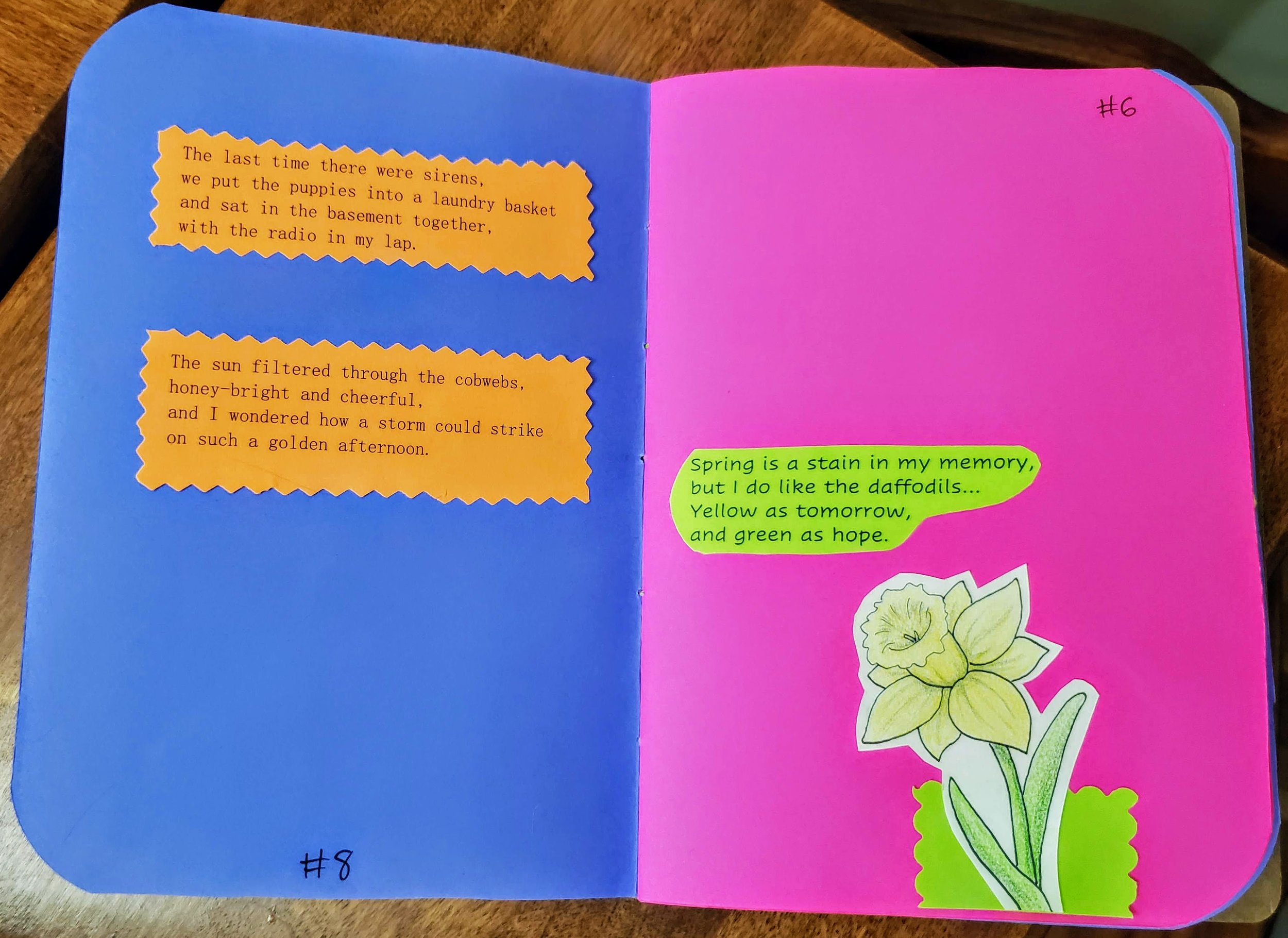
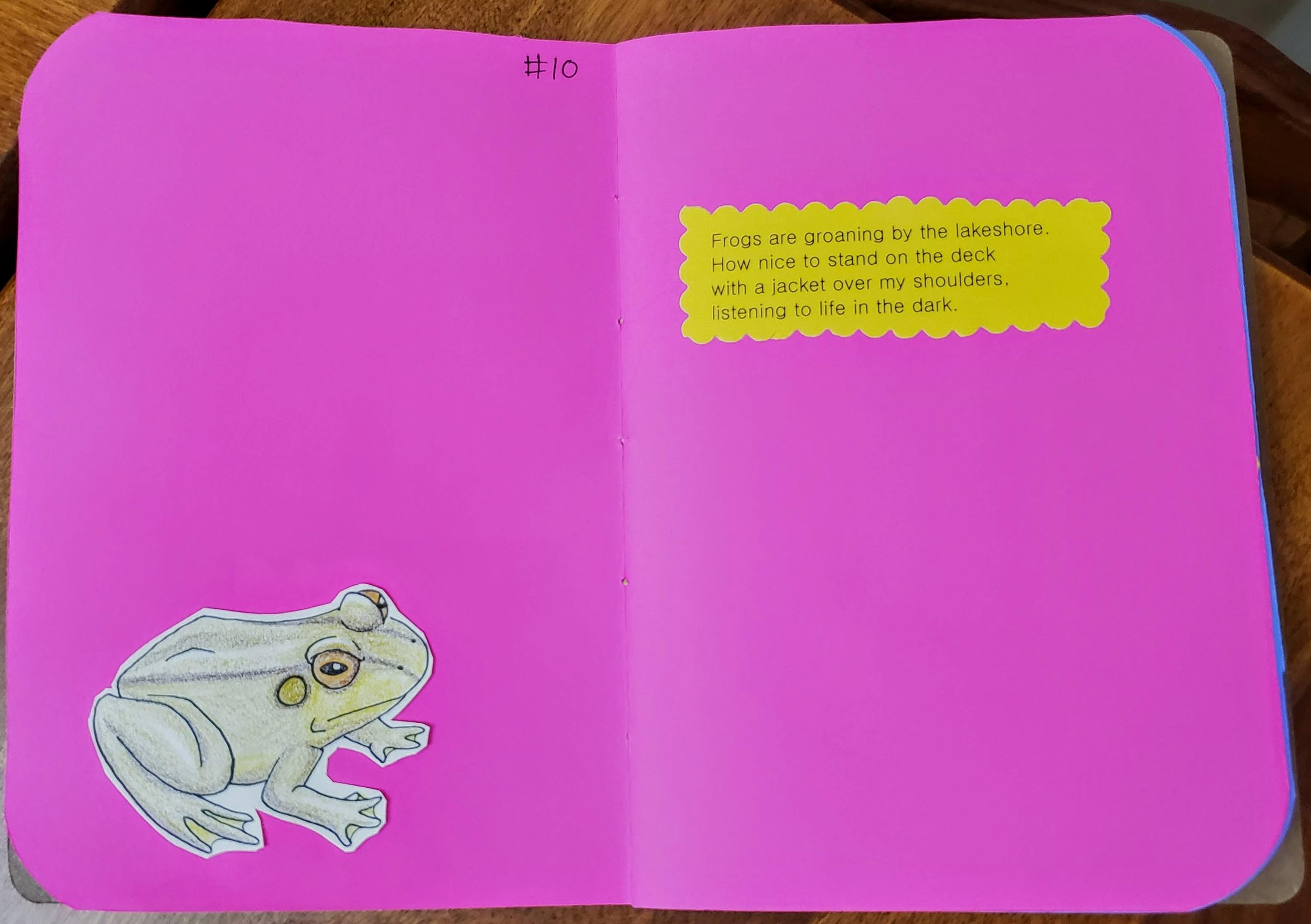
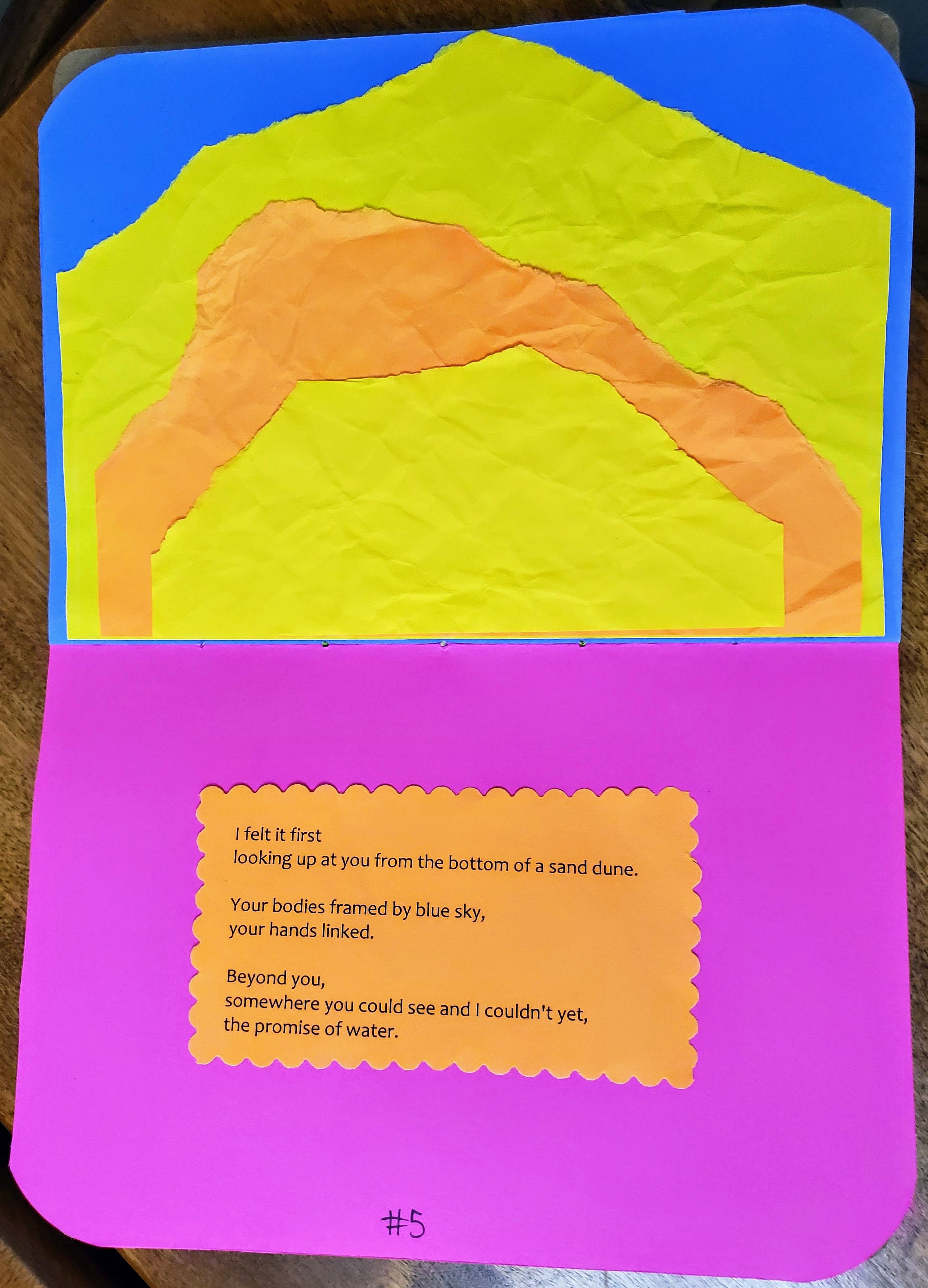
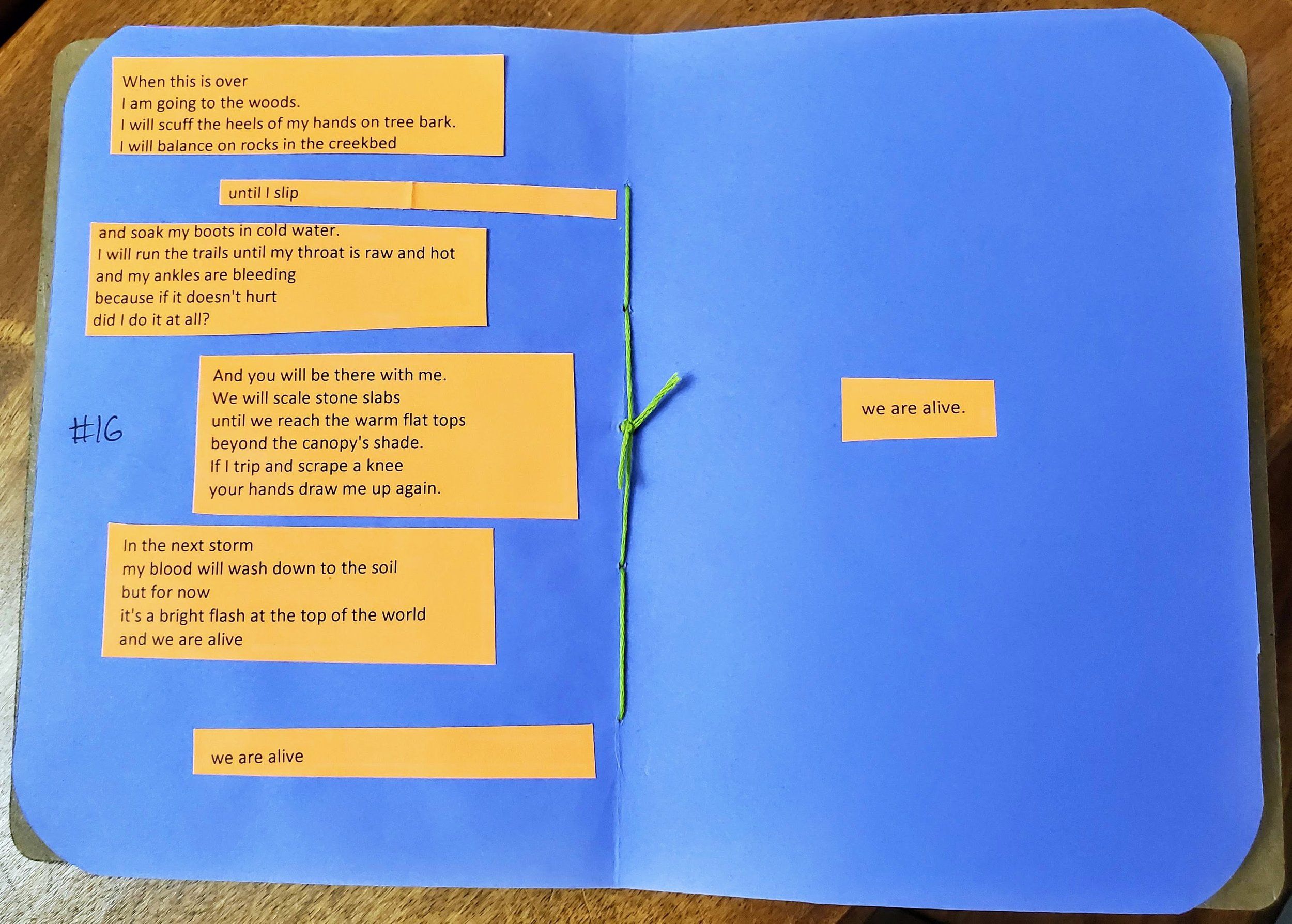
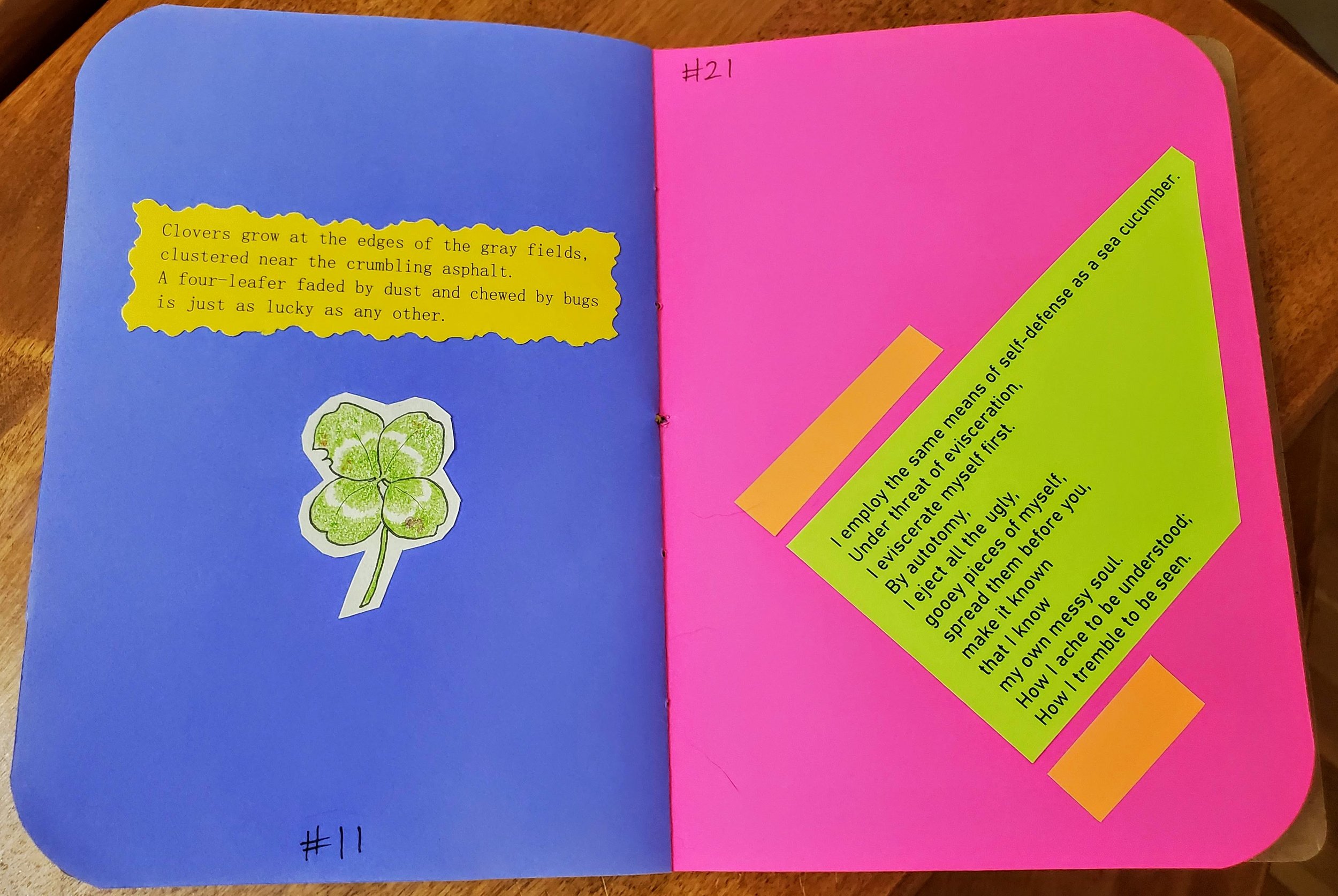
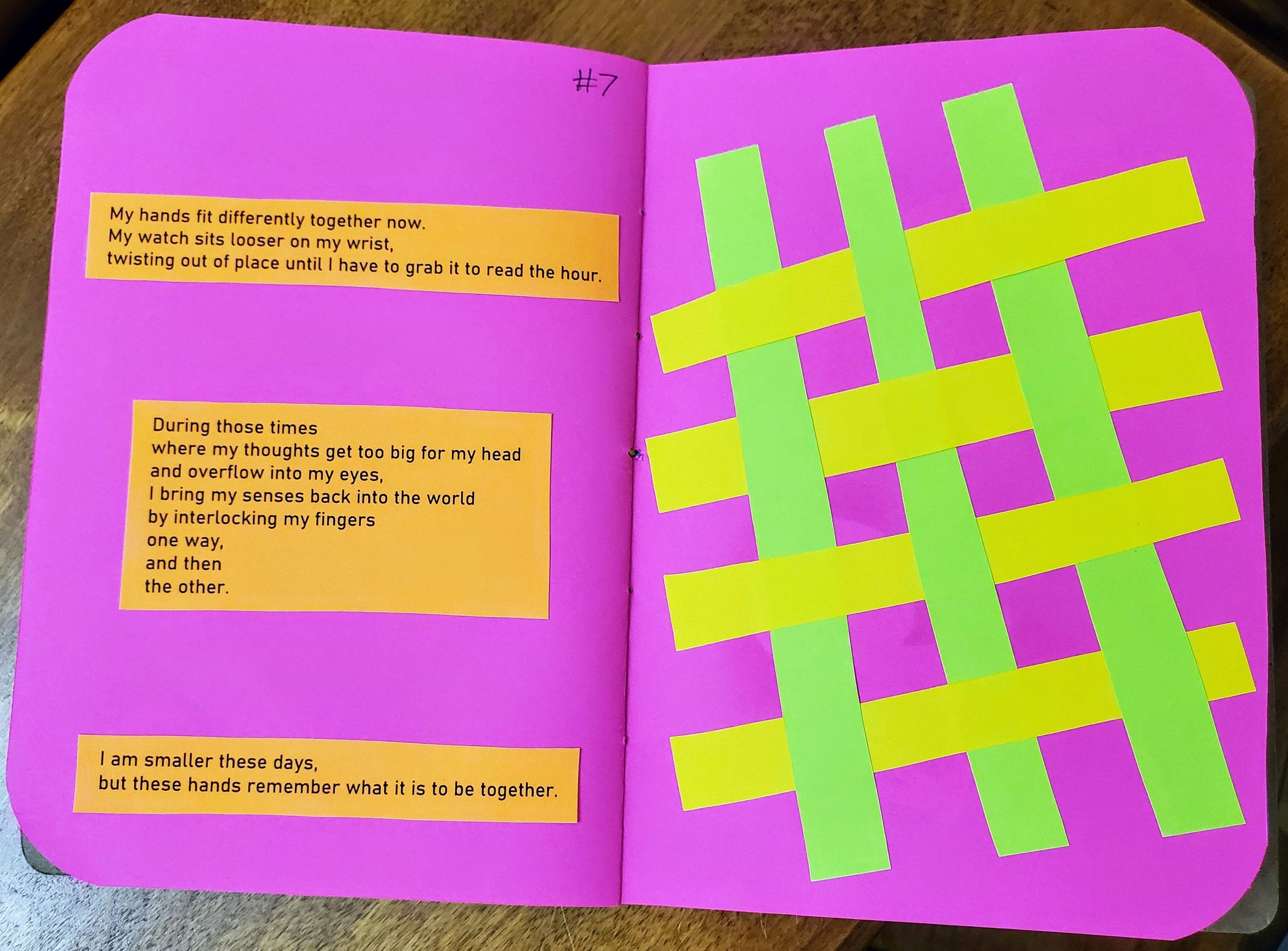
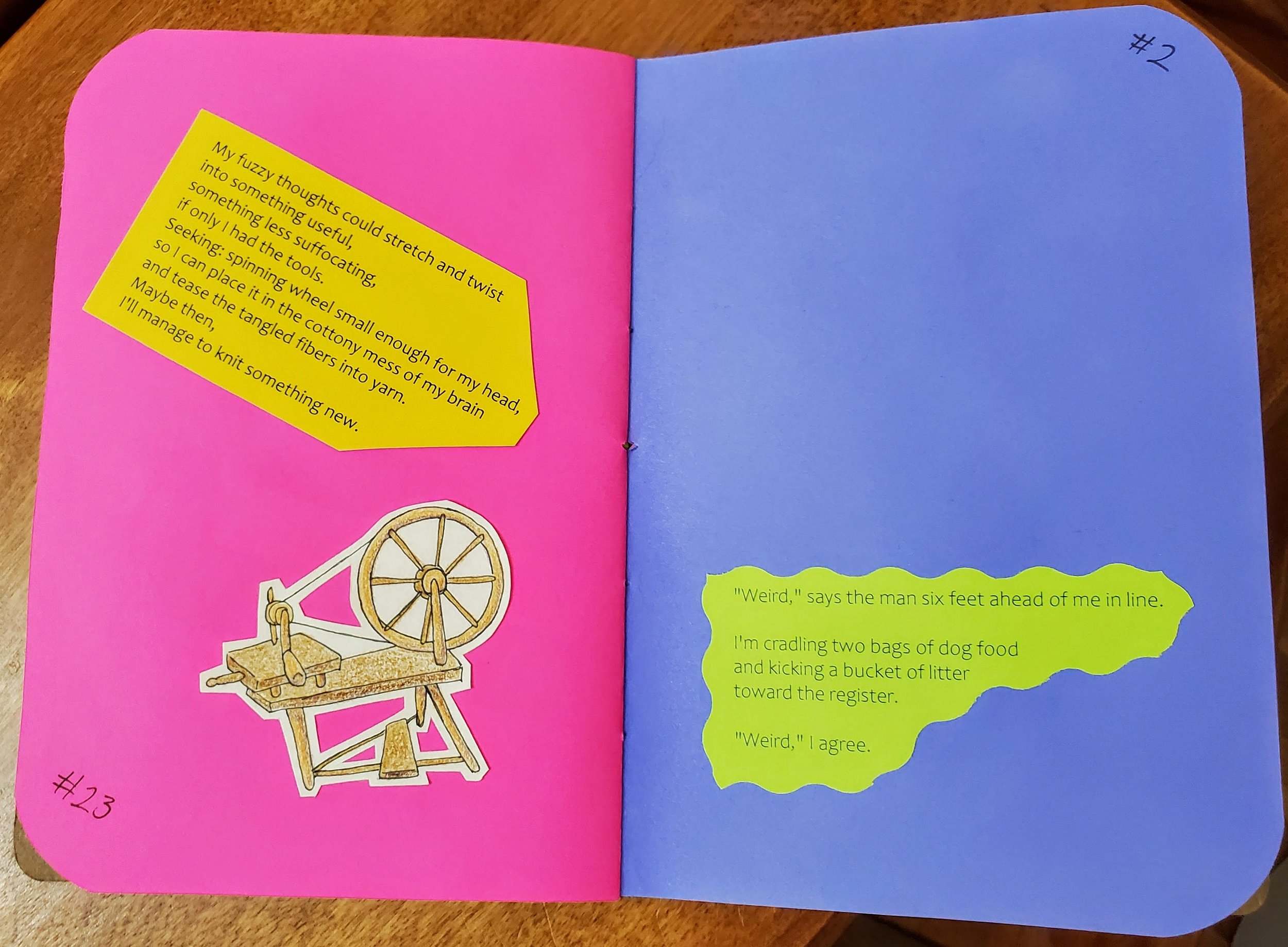
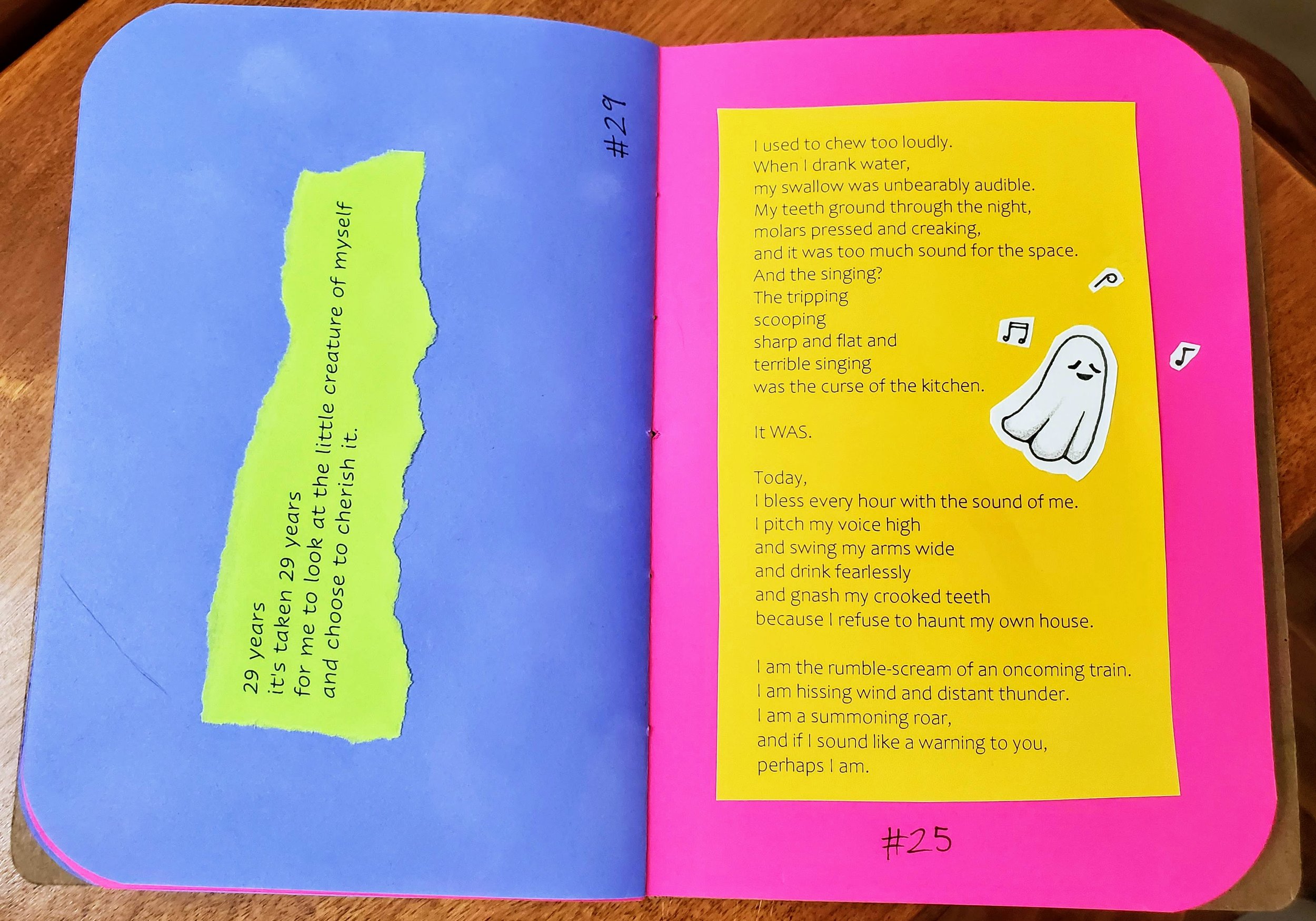
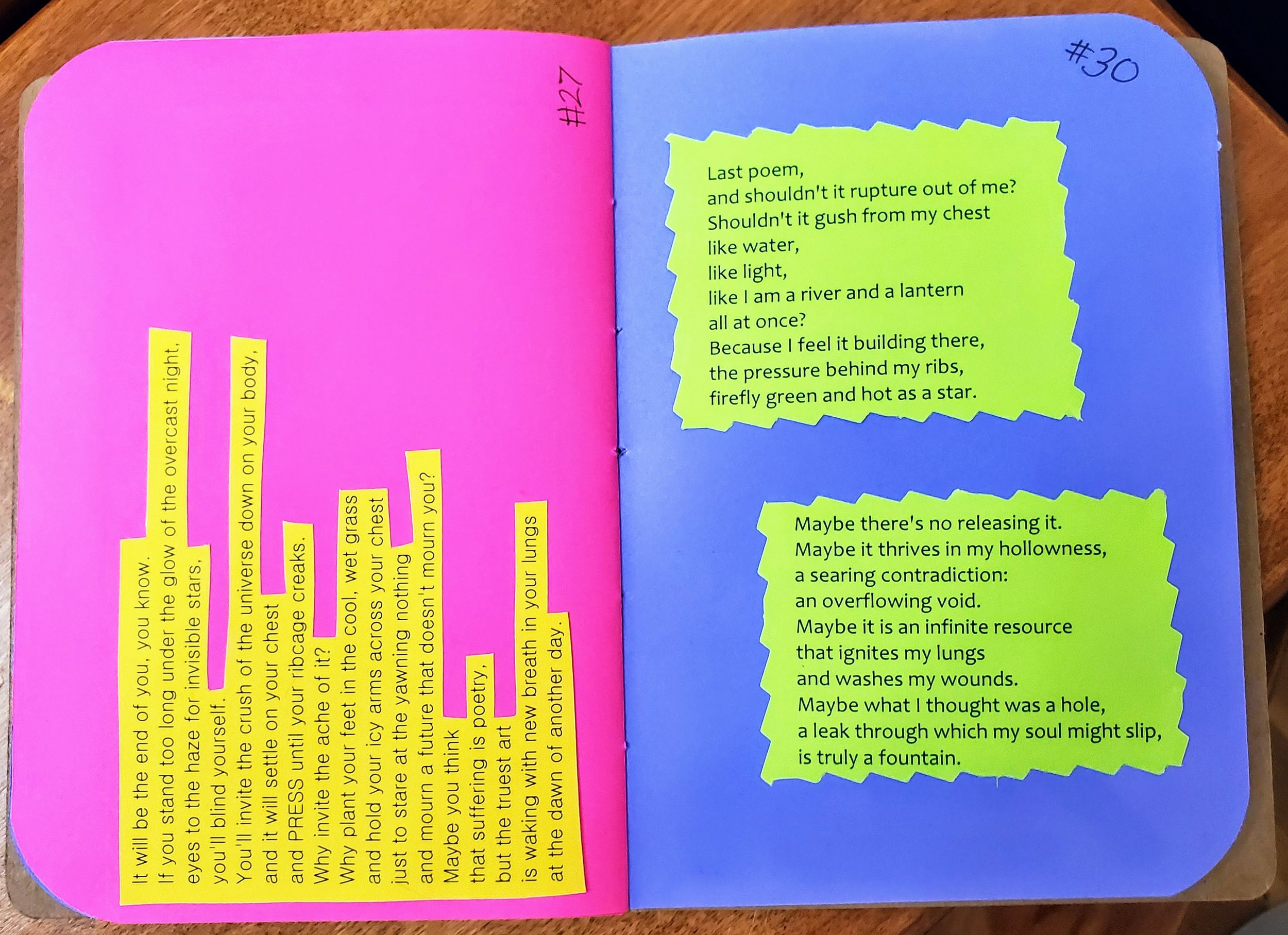
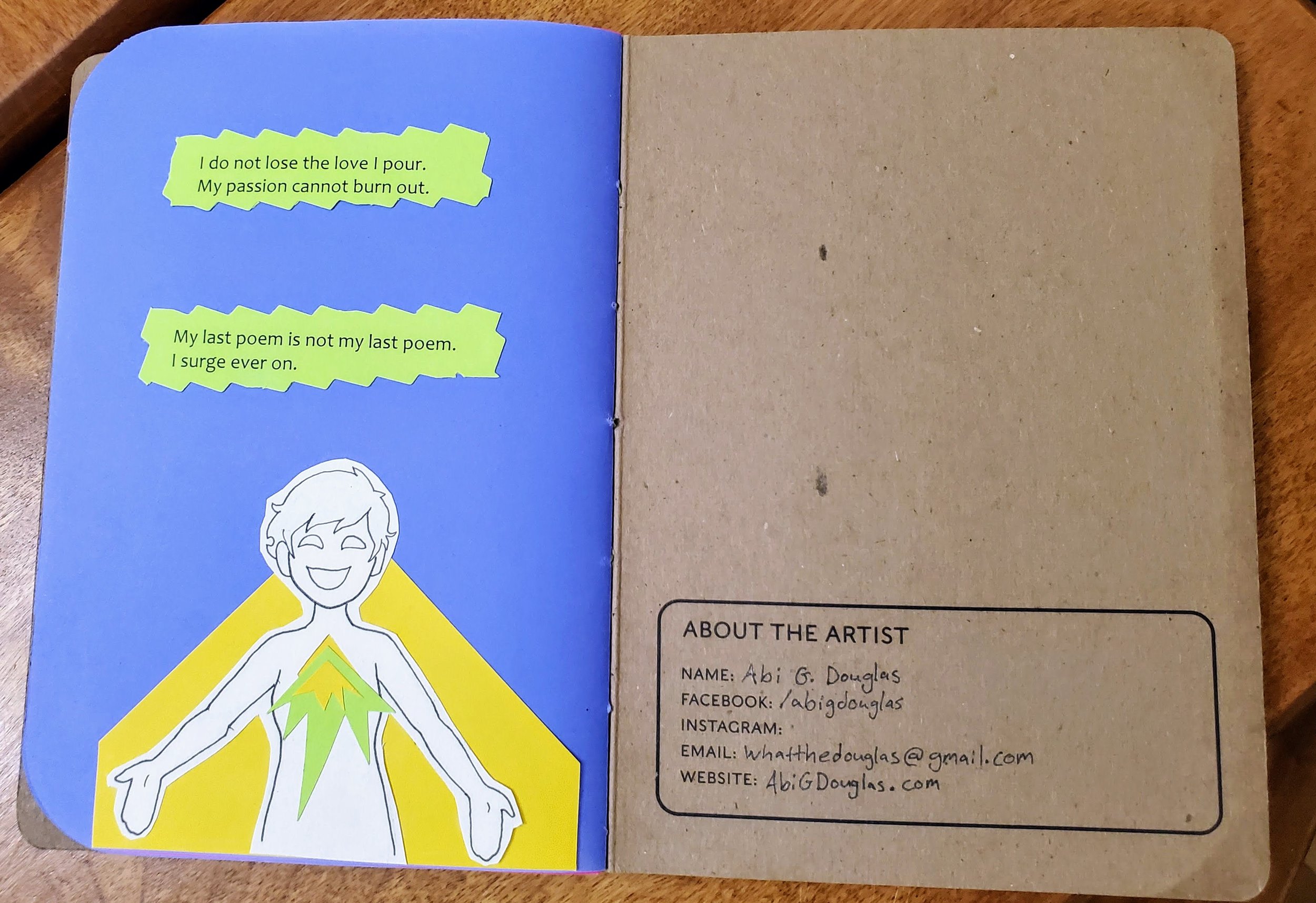
No one that I know will ever see my poetry book again, but you can see it here, hastily captured as it was, in the world’s smallest digital sketchbook library.

Please enjoy my Poems from April.


The Year of the Unicorn - Lesson 2: Change is the Only Constant

Between driving to work one morning and driving home, a stoplight appeared on my route. This shouldn’t have been a surprise. I’ve been navigating the construction zone for months now and have frequently passed under the bar of the stoplight, the light fixtures themselves black-bagged overhead like Scooby-Doo villains waiting to be unmasked. Rationally, I knew the bags would come off and the lights would be put into effect someday.

Despite the months of foreshadowing, however, I nearly slammed on my brakes as I approached the new and very vividly green light over the intersection, suddenly unsure of which color meant “stop.” I lurched through the crossing, grateful that no one had been behind me while I suffered my mini-stroke. It took my heart two blocks to dislodge itself from my throat.

Inexplicably, I was pissed. You think you can just turn on one day and expect me to obey you, stoplight? Is this my life now? Occasionally having to stop at an additional intersection on my commute to and from the office? How dare you impede me?

Change often elicits a strong emotional response from me, even if it’s out of proportion and ultimately fleeting. I’ve given a eulogy for a fried laptop. I felt betrayed by the gas station next to my office when they stopped stocking my favorite flavor of energy drink. Just a couple weeks ago, I endured a wave of sorrow after seeing an old sports bar transition into a Mexican restaurant. I had no connection to that bar. I’d never been inside it. I never intended to go inside it. I am far, far more likely to visit now that enchiladas verdes and margaritas are on the menu. So why did I tear up to see the new paint job?

Change is death and so change is mourned. We grieve the end of the old even when it makes way for something better (like enchiladas verdes and margaritas). We grieve even when the stakes are low. Elisabeth Kübler-Ross’s five stage model of grief (flawed as it may be decades after development) applies not only to life-or-death traumas but to smaller life changes as well. Grief is grief.

Which is a bummer of sorts, considering my next Year of the Unicorn lesson is:

Change is the Only Constant

The expression comes from the philosopher Heraclitus, who was kind of a turd (but with a name like that, can we really fault him?). The associated Greek phrase Panta Rhei may also ring a bell, translating to “everything flows” or “life is flux,” or so the internet informs me. It’s the concept that you may step in the same river twice, but is it really the same river? The waters are eternally changing, moment to moment. Our perception of “same” is not really sameness. Life is constant transition.

That concept initially scared me. If all is flux, where is the stability? What river rock can I grab hold of to keep from drowning when even the stones are doomed to erode? Must I spend my life fighting the current? What an exhausting existence!

Heraclitus would agree, calling that desire to cling an unnatural and detrimental impulse. If life is flowing and you as an individual refuse to flow with it, then are you really participating in life?

And then Heraclitus would declare himself the only “woke” person at the party and go sit in a corner to mutter cryptically to himself and weep over the foolishness of man.

Super relatable expression though. Source

Super relatable expression though. Source

So the “natural” way to deal with change is to flow with it, right? But that’s a terrifying thought. That means letting go of that river rock and tumbling downstream. It means being battered against boulders and dragged across the stony riverbed. It means spending some time with your head under the surface, blind and spiraling.

In such a circumstance, your fluidity will save you. Bracing against every impact only results in bruises… Why not move as the river moves? Bend around the obstacles, loosen your limbs and let yourself float downstream.

Which is all nice and romantic in theory, but painful in practice. Lately, I’ve been scrabbling for a handhold as I plunge through the rapids of my life. This is not the river cruise I signed up for. I didn’t add this crap to my vision board. I desperately want to swim upstream, back to familiar vistas and predictable waters.

However, no amount of doggy-paddling can transport me back through time. I’m tired, y’all. The current is strong, and I’m learning to yield to it.

This is not the first dramatic life change I’ve experienced and it probably (hopefully!) won’t be the last. Good things have come from those changes, rough as they were at the time. Change is death and change is life (Heraclitus’s Unity of Opposites and all that): I’ve lost wonderful things, but also gained new treasures. The river has carried me to beautiful vantage points, despite taking me through patches of churning whitewater.

My Year of the Unicorn is all about regaining a sense of wonder toward everything life offers. If the essence of life is change, then that means I need to appreciate change as well, whether it’s a new stoplight or an emptier home. If change is constant, then there will be joy again if my heart is open to it. The trick is to remain receptive, flexible, and optimistic.

Floating ain’t easy, but it does give you a good view of the clouds.

A Heavy-Hearted Announcement

One year ago, I wrote about my Anti-Death Spray: my reasons to stay alive and joyful. The list started with my wife’s name. Today, after months of agony and resistance, I removed her from my list.

Kelsey and I are divorcing. Even now, after everything we went through to come to this immensely sorrowful decision, I find myself rereading those words in disbelief. I don’t want this to be happening. I stand by my vows to her, that I love her with a love bigger than myself. I feel eviscerated by this change.

I’m sure many of you who know me personally are shocked by this announcement. I get it. Hell, I’m shocked too. I could never have foreseen this outcome. But that’s what everyone in this situation says, huh?

I won’t get into the details here. There’s an angry and wounded voice in my heart that wants to heard, but letting that voice out to rage helps no one.

What does help is updating my list of happy things to keep living for.

I still love Kelsey, but she can’t be at the top of my list anymore.

She’s not the only part of my list that’s changed, though. Life is change. Over the past year I’ve found many new treasures to cherish. New video games and new music. New recipes and new restaurants. New friends and new adventures. I’ve learned to appreciate an assortment of experiences that would never have made my list last April and I’m grateful for that.

Instead of asking me about this enormously difficult moment in my life, I encourage you to review your own list of loves. What has changed in your world? What new joys await you?

I may be quiet for a while as I process this lifestyle shift, but I’m still Abi, I still know who I am and what I want, and I still have happiness somewhere on my horizon.

As do you.